

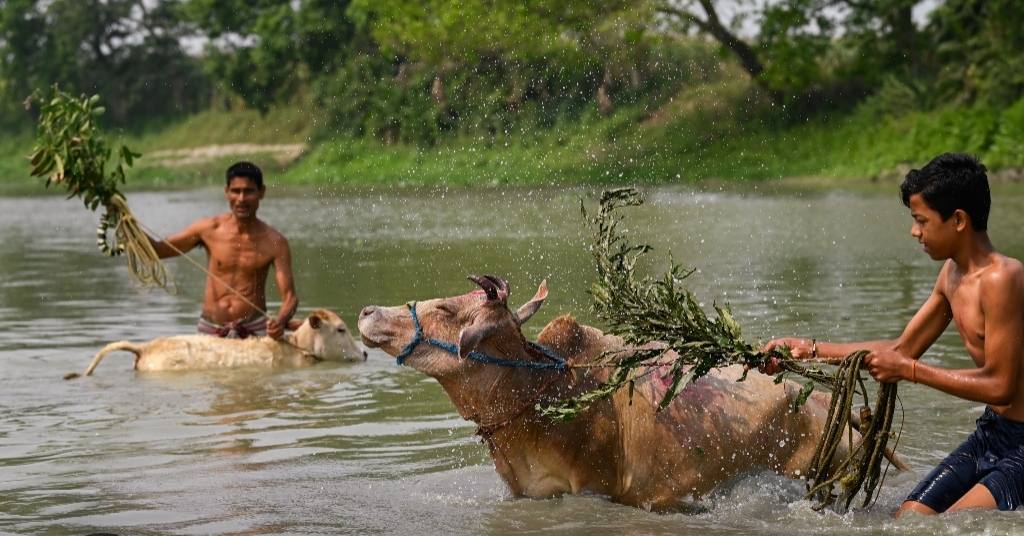
Assam on Tuesday marked Goru Bihu, the opening day of Rongali Bihu celebrations, with traditional rituals dedicated to cattle, a cornerstone of the state’s agrarian life.
Observed on the last day of the Assamese month of Chot (চ’ত), Goru Bihu is a day when farmers and rural communities express gratitude to cows, oxen and buffaloes for their role in agriculture and daily sustenance.
The day began early across villages, with people leading their cattle to nearby rivers and ponds for a ceremonial bath. The animals were cleaned using traditional herbal mixtures made of black lentil paste, turmeric, ginger and medicinal leaves such as makhiyati and dighlati, believed to protect them from diseases.
Following the bath, cattle were fed special offerings including fresh greens, seasonal vegetables such as ash gourd and salt. Farmers also tied new ropes around their necks and adorned them with garlands, symbolising care and renewal for the coming agricultural year.
As part of the rituals, elders recited traditional Bihu verses, wishing prosperity and good health for both the animals and their households. The practice of gently tapping cattle with plant twigs while chanting blessings remains a distinctive feature of the celebration.
Goru Bihu holds deep cultural and emotional significance in Assam, particularly in rural regions across the Brahmaputra and Barak valleys, where cattle continue to play a vital role in farming activities. Even as urbanisation grows, many families return to their native villages to take part in the observance.
This year, celebrations were held across multiple districts, including Kamrup, Nagaon, Sivasagar and Goalpara, with community participation and cultural programmes adding to the festive atmosphere.
Goru Bihu sets the stage for the subsequent days of the festival — Manuh Bihu, dedicated to people, and Gosai Bihu, devoted to deities — completing a cycle of gratitude towards nature, society and the divine.


