

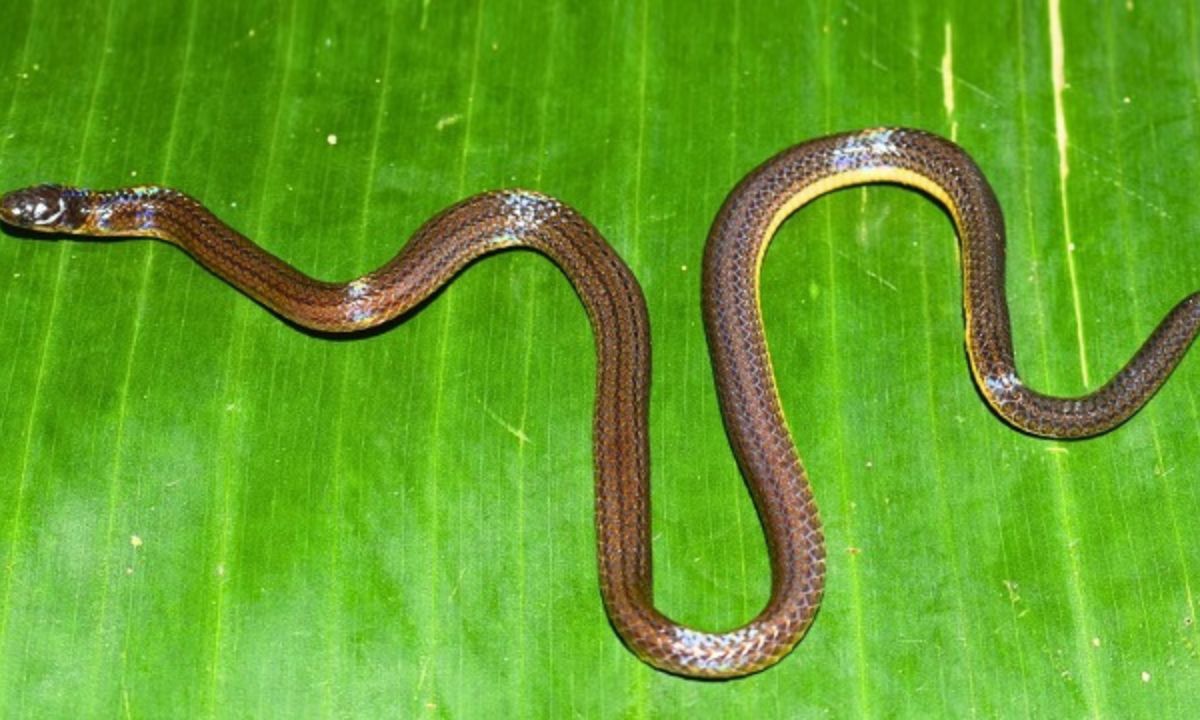
Scientists from multiple institutions have discovered a new species of burrowing reed snake in the West Garo Hills district of Meghalaya, adding a previously unknown reptile to India’s biodiversity records. The species, named Calamaria garoensis — commonly referred to as the Garo Hills reed snake — has been formally described in Taprobanica, a peer-reviewed scientific journal.
The snake is small, subterranean in habit, and difficult to detect — characteristics that researchers believe allowed it to remain undocumented for years despite likely inhabiting the region for a considerable time. Its burrowing lifestyle in the forested terrain of West Garo Hills made it elusive to earlier surveys, underlining how much of India’s herpetological diversity remains to be catalogued, particularly in the biodiverse Northeast.
The discovery was the result of collaborative fieldwork and taxonomic study by experts from Help Earth, Cotton University, Assam Don Bosco University, Mizoram University, the Zoological Survey of India, and Indonesia’s National Research and Innovation Agency — a cross-institutional effort spanning multiple states and countries.
The finding underscores both the ecological richness of Meghalaya’s forests and the critical importance of protecting natural habitats in the Northeast to preserve species that science has yet to encounter.


