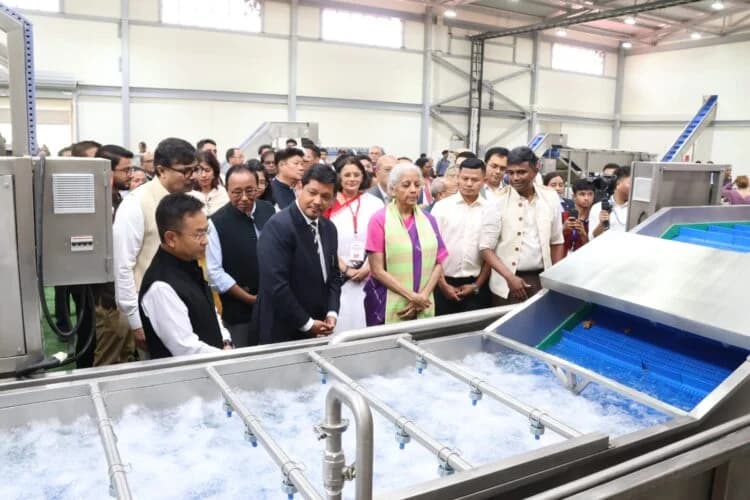
The Northeast’s organic agriculture sector received a major boost on Friday with the inauguration of the region’s largest organic spice processing unit at Bhoirymbong in Meghalaya’s Ri-Bhoi district. Union Finance Minister Nirmala Sitharaman formally inaugurated the facility in the presence of Meghalaya Chief Minister Conrad K. Sangma and Sikkim Chief Minister Prem Singh Tamang.
Established under the Eastern Ri-Bhoi Organic Farmer Producer Company Limited, the project has been developed through the Government of India’s Mission Organic Value Chain Development for North Eastern Region (MOVCD-NER). Built at an investment of nearly ₹32 crore, the facility is expected to enhance value addition, strengthen supply chains and create new opportunities for farmers engaged in organic cultivation.
The processing centre has an annual capacity exceeding 10,000 metric tonnes and will handle a variety of organic spices, including ginger, turmeric, black pepper and chilli. Officials believe the facility will help local farmers move beyond raw produce sales by enabling processing, packaging and improved market access.
A key highlight of the project is its distinction as the first organically certified spice processing unit in Northeast India. The facility has secured certification under both the National Programme for Organic Production (NPOP) and European Union Organic Standards, allowing products processed at the unit to access premium domestic and international markets.
Speaking at the inauguration, Finance Minister Sitharaman praised Meghalaya’s growing contribution to India’s organic agriculture sector. She highlighted the global recognition received by Lakadong turmeric following its GI tag status and noted the rising demand for Meghalaya’s organic ginger in international markets.
The leaders present at the event emphasized that the initiative would strengthen farmer-owned enterprises and promote a more sustainable agricultural economy. By improving processing facilities and market connectivity, the project is expected to increase farmers’ incomes while enhancing the competitiveness of organic products from the Northeast.
Apart from supporting agriculture, the processing unit is also expected to generate employment and encourage entrepreneurship in rural areas. The project is being viewed as an example of how investment in modern infrastructure can empower farming communities and create long-term economic benefits.