
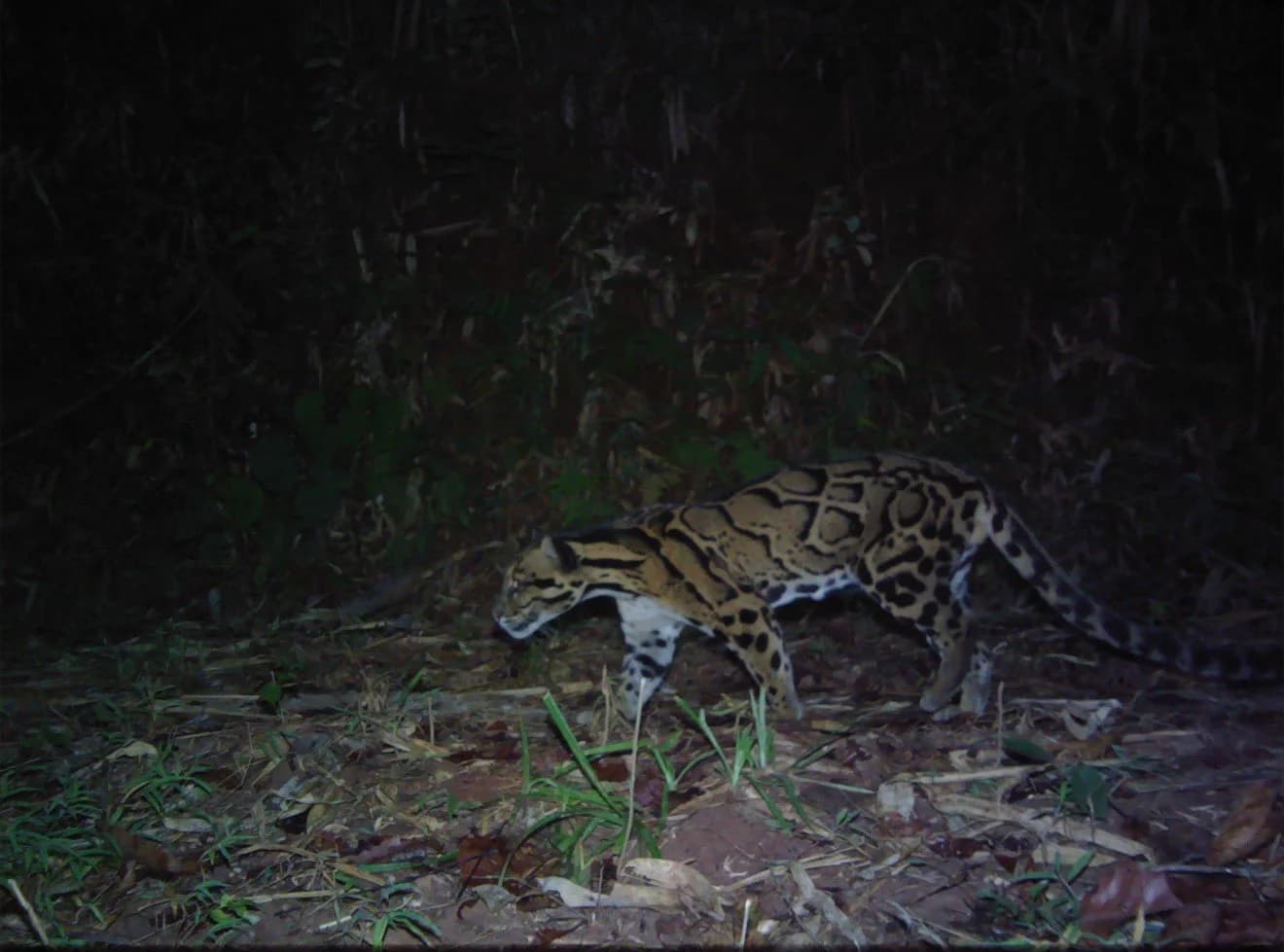
On the occasion of International Clouded Leopard Day, Meghalaya Chief Minister Conrad K. Sangma announced the launch of 'Mission Clouded Leopard', a dedicated conservation programme aimed at protecting the state's official animal and strengthening efforts to preserve its habitat.
Sharing the announcement, the Chief Minister said the initiative marks a significant step towards safeguarding the vulnerable species through scientific research, habitat restoration and community participation.
The Clouded Leopard (Neofelis nebulosa) is listed as Vulnerable on the International Union for Conservation of Nature (IUCN) Red List and receives the highest level of legal protection under Schedule I of the Wild Life (Protection) Act, 1972.
In Meghalaya, the elusive big cat is found across several forest landscapes, including Nokrek, Balpakram, Baghmara, Narpuh and Nongkhyllem, as well as in community-managed forests.
According to the Chief Minister, Mission Clouded Leopard will focus on habitat protection and restoration, scientific research, long-term monitoring, stronger protection measures, improving landscape connectivity, capacity building of frontline forest personnel, community participation and public awareness.
The programme will be guided by the Meghalaya Clouded Leopard Action Plan, which is currently being prepared by the State Forest and Environment Department.
An ongoing scientific assessment has already identified 21 individual clouded leopards in the Balpakram landscape. Officials clarified that these are preliminary findings and that the survey will now be expanded to all major habitats across the state.
The expanded assessment is expected to provide Meghalaya with its first comprehensive population estimate of its State Animal.
Highlighting the importance of collaborative conservation, Chief Minister Conrad K. Sangma called upon traditional institutions, local communities, researchers, conservation organisations and young people to work together with the government to ensure the long-term survival of the species.
He said that while significant progress has been made, much of the conservation work still lies ahead and requires sustained public participation and scientific efforts.