

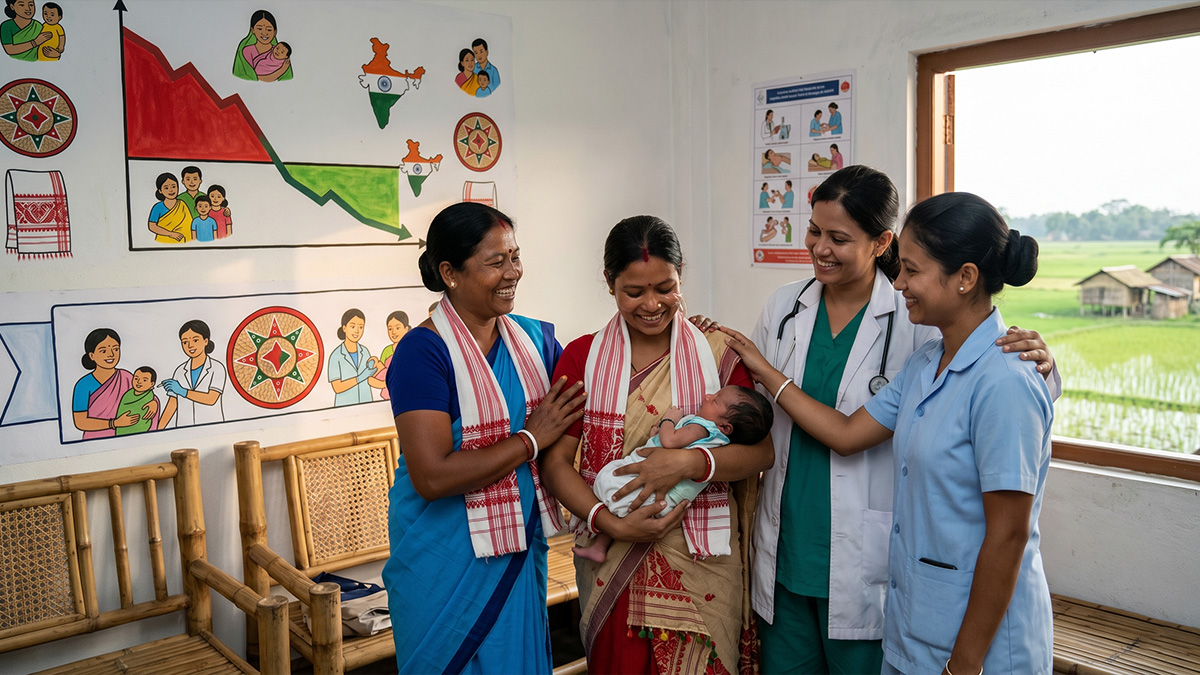
Assam has achieved a major milestone in public healthcare as the state’s Maternal Mortality Rate (MMR) declined to 84 deaths per lakh live births, falling below the national average of 88 for the first time.
The development is being seen as a significant achievement for the state’s healthcare system and maternal welfare programmes. Chief Minister Himanta Biswa Sarma described the moment as deeply emotional and reflective of Assam’s long-term healthcare transformation.
Recalling his tenure as Health Minister in 2006, Sarma said Assam’s Maternal Mortality Rate had then stood at 480, making the current improvement the result of years of sustained effort and healthcare reforms across the state.
The Chief Minister credited doctors, nurses, ASHA workers, health officials, and frontline healthcare staff for the achievement, stating that their work in remote villages, difficult terrains, and urban areas played a critical role in reducing maternal deaths.
He said the success represented more than statistical improvement, noting that behind every saved number was a mother who safely returned home to her family.
Public health experts attributed the decline in maternal mortality to stronger antenatal monitoring systems, increased institutional deliveries, improved emergency obstetric care, and greater public awareness regarding maternal health and safe childbirth practices.
Officials also highlighted the importance of investments made in strengthening rural healthcare infrastructure across Assam. Special emphasis was placed on the contribution of ASHA workers, who have acted as a vital link between pregnant women and healthcare facilities, particularly in remote and underserved regions.
The state government stated that Assam’s geographical challenges had made healthcare delivery especially difficult over the years, making the achievement even more significant.
Sarma expressed gratitude to the healthcare workforce and the people of Assam, saying the progress reflected years of collective commitment and coordinated action across all levels of the health system.
The achievement is now being viewed as a major turning point for Assam’s healthcare sector and an example of the impact of sustained investment in maternal and child health services.


