
The Assam Government has reaffirmed its target of producing 10 lakh litres of milk every day as it intensifies efforts to achieve self-sufficiency in dairy production and improve the livelihoods of farmers across the state.
Chief Minister Himanta Biswa Sarma on Thursday said the government is supporting more than 25,000 dairy farmers through subsidies aimed at increasing milk production, promoting modern dairy farming practices and strengthening rural incomes.
Sharing the government's vision on social media, Sarma said, "Every glass of milk nourishes a family and strengthens the rural economy. Our mission is to produce 10 lakh litres of milk every day."
The Chief Minister had first announced the target in July 2025 during the inauguration of the expanded Purabi Dairy facility in Guwahati. At the time, he outlined plans to establish 4,000 milk cooperative societies across Assam to achieve the production goal.
Since then, the state government has introduced several initiatives, including financial assistance for dairy farmers, scientific breeding programmes, improved livestock management and better veterinary healthcare services.
Earlier this year, the Chief Minister also announced a ₹200-crore dairy plant at Mariani in Jorhat district. The proposed facility is expected to procure milk through cooperative societies, create employment opportunities and strengthen Assam's dairy value chain.
Officials believe these initiatives will reduce the state's dependence on milk imports from other parts of the country while generating sustainable income for rural households.
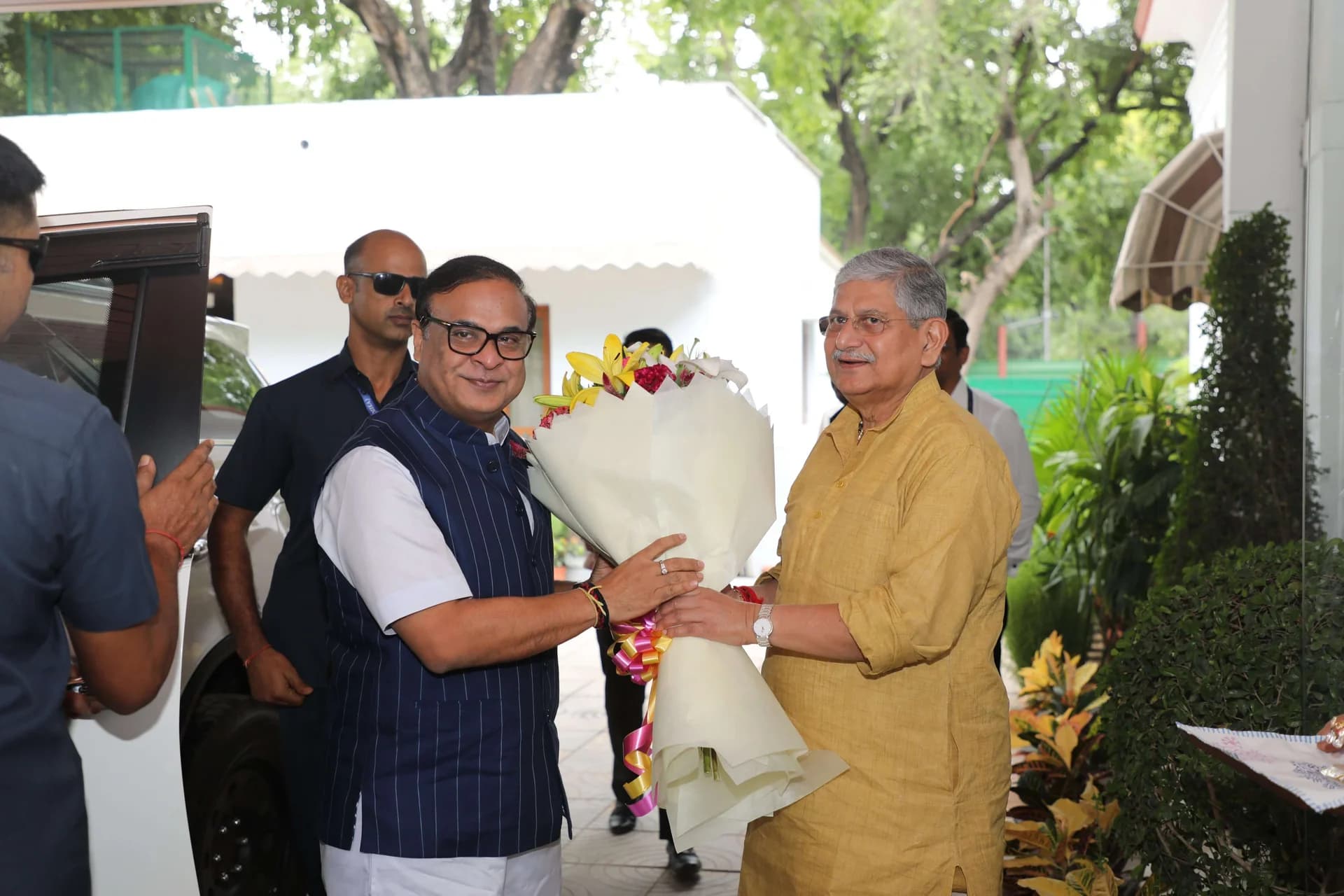
During his visit to New Delhi on Thursday, Chief Minister Sarma also met Union Minister for Fisheries, Animal Husbandry and Dairying Rajiv Ranjan Singh to discuss measures for accelerating the growth of Assam's livestock and fisheries sectors.
According to the Chief Minister, the discussions focused on expanding Assam's fisheries potential, strengthening dairy cooperatives, improving veterinary infrastructure, establishing Pashu Aushadhi Kendras, setting up Tetrapack (UHT) and milk powder plants, and improving cattle breeds through artificial insemination.