
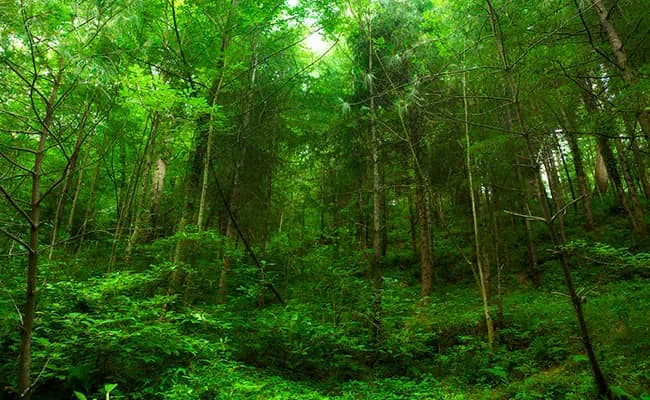
An Eco-Sensitive Zone (ESZ) is a regulated area notified around protected forests, national parks and wildlife sanctuaries to protect their ecological integrity. These zones are intended to act as a buffer between protected areas and surrounding regions, helping reduce the impact of development and other activities that could affect wildlife and the environment.
Under the National Environment Policy, 2006, eco-sensitive areas are identified for special conservation attention based on factors such as biodiversity, wildlife, landscape and ecological value. ESZs are notified by the Ministry of Environment, Forest and Climate Change under the Environment (Protection) Act, 1986, based on the applicable guidelines and site-specific assessments.
The primary objective of an ESZ is to regulate activities around protected areas. Certain activities, including commercial mining, polluting industries, major development projects and some large-scale construction, may be prohibited or regulated within these zones. At the same time, activities such as traditional agriculture and other local uses may be permitted subject to applicable conditions.
The Supreme Court has also issued important directions concerning ESZs. In its June 3, 2022 order in the T.N. Godavarman case, the Court directed that a minimum one-kilometre ESZ be maintained from the demarcated boundaries of national parks and wildlife sanctuaries where no such area had been notified. The direction was intended to ensure that protected areas received an additional layer of environmental protection.
However, in its subsequent April 2023 clarification, the Supreme Court modified the earlier approach and made it clear that a uniform one-kilometre ESZ could not be imposed mechanically on every protected area. The extent of an ESZ has to take into account the specific ecological conditions and existing notifications applicable to each protected area.
Where an ESZ has already been notified, the notified limits and applicable regulations remain relevant. Where no ESZ has been notified, the Supreme Court's directions provide a protective framework while allowing site-specific assessment and the prescribed legal process.
The Supreme Court has continued to emphasise the importance of protecting ecologically sensitive areas from activities that could undermine conservation objectives. The ESZ framework therefore seeks to balance environmental protection with the needs of communities and development in areas surrounding protected forests, national parks and wildlife sanctuaries.
In simple terms, an Eco-Sensitive Zone is not necessarily a complete ban on human activity. Instead, it establishes a regulated area where activities are classified as prohibited, regulated or permissible to prevent harmful development from affecting the protected area.