
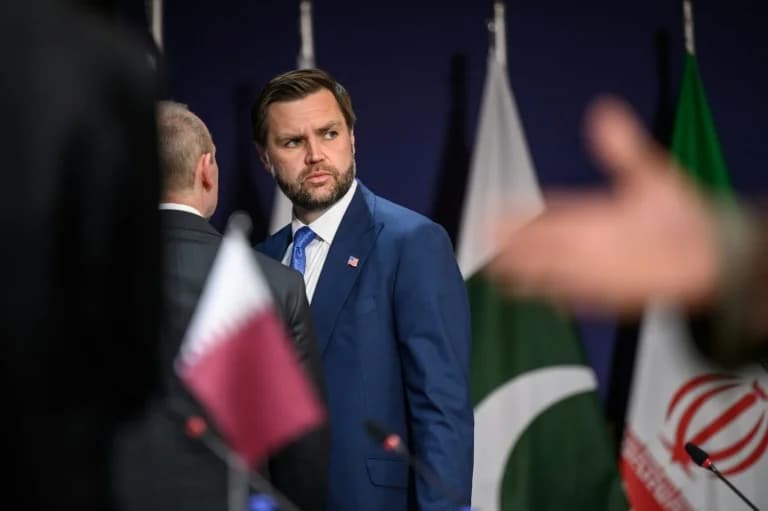
The first round of high-level talks between Iran and the United States concluded in Burgenstock, Switzerland, on Monday, with both sides agreeing to continue technical negotiations throughout the week as efforts to ease regional tensions and advance a broader political settlement gained momentum.
Iranian Foreign Minister Abbas Araghchi described the discussions as a significant breakthrough, claiming that mediation efforts had produced "major progress" and laid the foundation for future agreements. The talks were held under a 14-point Memorandum of Understanding (MoU) signed earlier this month, aimed at ending hostilities and creating mechanisms to prevent renewed conflict.
In a statement posted on social media platform X, Araghchi said the negotiations had yielded important developments, including progress on trade, sanctions relief and regional security arrangements.
The first round of talks produced several key outcomes:
• Roadmap for a Final Agreement Within 60 Days:
Iran and the United States agreed on a roadmap aimed at reaching a comprehensive agreement within the next 60 days. A High-Level Committee will oversee the process and provide political direction to technical working groups tasked with resolving outstanding issues.
• Lebanon De-Confliction Mechanism Established:
Both sides agreed to establish a de-confliction cell involving Iran, the United States and Lebanon. The mechanism is intended to monitor compliance with the cessation of military operations and prevent renewed clashes that could undermine the broader peace process.
• Direct Communication Line for Strait of Hormuz:
A direct communication channel will be established between the parties to reduce the risk of misunderstandings and ensure the safe passage of commercial shipping through the Strait of Hormuz, one of the world's most critical energy transit routes.
• Progress on Trade and Economic Relief:
Araghchi claimed that the talks had already delivered economic benefits for Tehran, including the easing of restrictions on oil and petrochemical exports, partial release of frozen assets and the launch of reconstruction and development initiatives. However, these claims have not yet been officially confirmed by the United States.
• Technical Negotiations to Continue This Week:
Negotiators agreed that discussions on unresolved issues would continue at the technical level throughout the week. Working groups are expected to focus on sanctions, regional security arrangements, implementation mechanisms, nuclear-related issues and dispute-resolution procedures.
Araghchi also identified the implementation of the Lebanon monitoring mechanism as the immediate challenge ahead, describing it as the "first real test" of the understandings reached in Switzerland.
"The first real test will be the Lebanon de-confliction cell," the Iranian foreign minister said, stressing the importance of ensuring adherence to the ceasefire framework.
While Washington has not yet issued an official statement detailing the outcome of the talks, both sides are expected to remain in Switzerland for further consultations as negotiators work toward a potential comprehensive agreement.
The discussions come at a critical time for the region, with ongoing efforts to reduce tensions, maintain stability in Lebanon and safeguard international shipping routes in the Gulf. Observers view the continuation of negotiations as a positive sign that diplomatic channels remain open despite deep differences between Tehran and Washington.
If successful, the talks could mark a significant step toward easing regional tensions and establishing a broader framework for long-term stability in West Asia.