
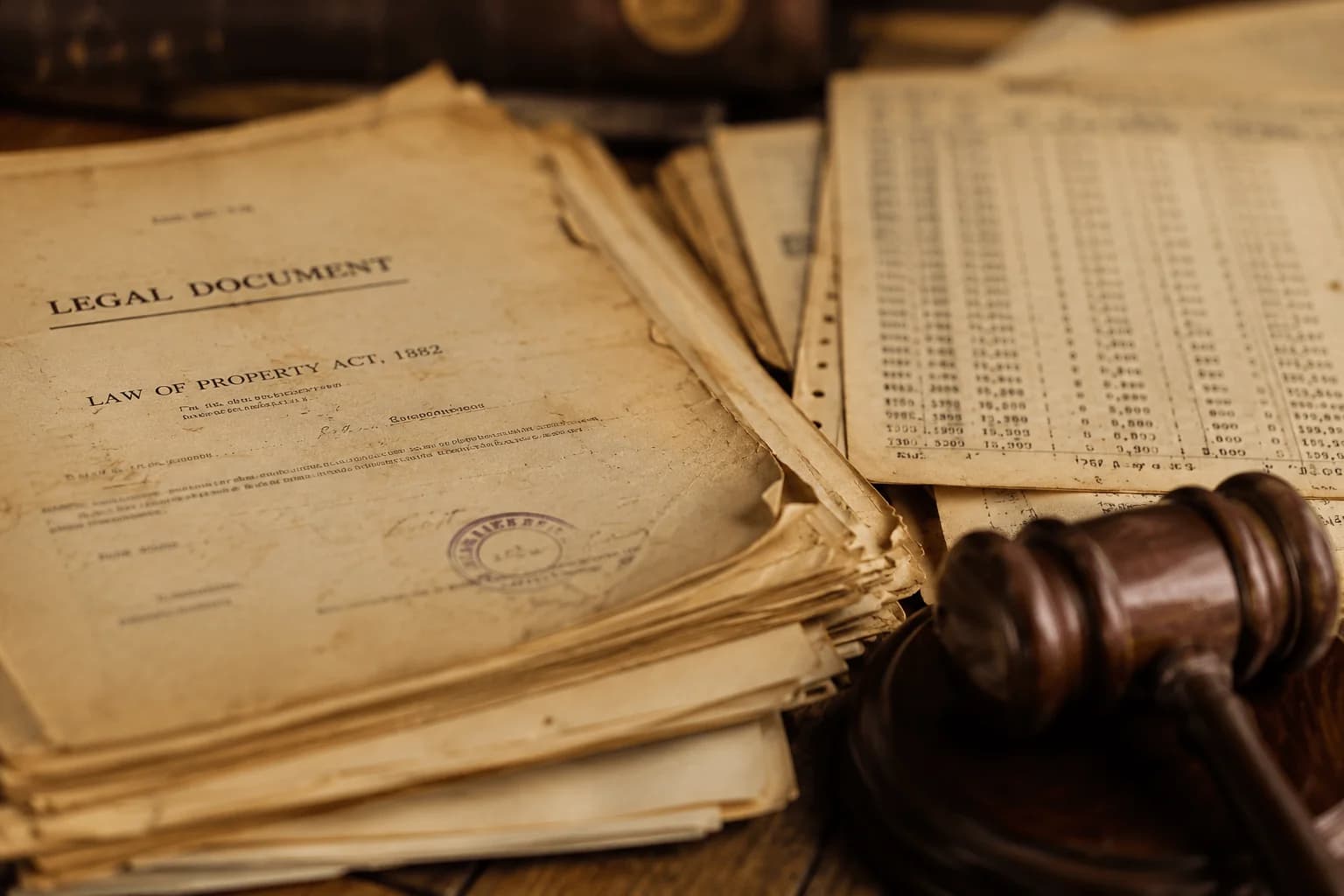
The Gauhati High Court recently upheld a Foreigners Tribunal decision declaring a daily wage labourer a foreigner, despite him submitting 15 different Assam citizenship documents to prove his Indian identity. The documents were rejected not because they were proven fake, but because they failed to meet the strict evidentiary standards required by Indian law.
If you are navigating citizenship issues or the National Register of Citizens (NRC) process, this case highlights a crucial legal reality: simply possessing paperwork is not enough; you must legally prove the documents and establish a flawless chain of ancestry.
Key Takeaways
The Gauhati High Court ruled that computer-generated 1951 NRC extracts are legally inadmissible without a specific digital evidence certificate.
Standard identity cards, such as PAN cards and Elector's Photo Identity Cards (EPIC or voter IDs), do not legally prove citizenship.
Land deeds are ineffective for proving lineage unless accompanied by revenue records showing how the property was inherited.
Under the Foreigners Act of 1946, the burden of proving Indian citizenship falls entirely on the accused, not the government.
What was the Gauhati High Court citizenship case about?
The case involves a daily wage labourer based in Borbori, near Guwahati. Born in 1988, the petitioner was flagged by a local Foreigners Tribunal and asked to prove he is an Indian citizen.
In Assam, the cut-off date for establishing Indian citizenship is midnight of March 24, 1971, in accordance with the Assam Accord. Anyone who entered the state after this date is considered a foreigner under the law. Foreigners Tribunals are quasi-judicial bodies tasked with deciding these specific cases.
The petitioner argued that his family had a history of displacement. He claimed they moved across several villages—from Charai Khasara to Dhobakura, then to Ghugudoba, and finally Hashdoba—due to severe river erosion along the Brahmaputra. While this is a common reality for families living in Assam's riverine "char" areas, the tribunal ruled against him, prompting his appeal to a Division Bench of the Gauhati High Court.
On June 30, the High Court dismissed his writ petition. The court held that every piece of evidence submitted was either legally inadmissible or too weak to connect the petitioner to his claimed Indian ancestors.
Why were the 1951 NRC copies rejected?
The most significant blow to the petitioner's case was the court's rejection of his 1951 National Register of Citizens (NRC) documents. The petitioner submitted computer-generated copies of the 1951 NRC to prove his father and grandparents were residents of India before the 1971 cut-off.
These copies were digitised legacy data printouts, generated during the 2015–2019 NRC updation exercise. However, under the Indian Evidence Act of 1872 (now the Bharatiya Sakshya Adhiniyam, 2023), any electronic or computer-generated record must be accompanied by a specific certificate under Section 65B. Because the petitioner did not provide this digital certificate, the court ruled the computer printouts had absolutely no evidentiary value.
Furthermore, the High Court noted a structural legal barrier. The 1951 NRC was prepared alongside the 1951 Census. Section 15 of the Census Act of 1948 strictly prohibits census records from being used as evidence in court. Therefore, using NRC extracts to prove domicile faces a major legal hurdle.
What went wrong with the other Assam citizenship documents?
Beyond the NRC data, the petitioner submitted a variety of traditional documents that many families believe are sufficient to prove their lineage. The court found fatal legal flaws in all of them:
The 2017 School Certificate: The petitioner provided a certificate from Hashdoba Anchalik High School stating he studied in Class 5 in 1999. The court rejected it because the headmaster who issued it was not brought to the court as a witness. Furthermore, the school's actual admission register was not produced. A certificate alone cannot legally prove the records behind it.
The 1973 Land Purchase Deed: A land deed executed by his grandfather was submitted. The court noted that if the grandfather owned this land, it should have passed down to his heirs. However, no revenue records, mutation documents (transfer of title), or relinquishment deeds were produced. Without this "devolution trail," the document proved a real estate transaction happened, but failed to prove a family connection.
Inconsistent Voter Lists: Certified voter list copies spanning from 1966 onwards unravelled under scrutiny. The court noted impossible age gaps—for instance, a family member aged 25 in 1979 was listed as 29 in 1989. The lists also featured unexplained names and placed the family in three different villages without a credible narrative connecting them.
Are PAN and Voter ID cards proof of citizenship?
Many citizens assume that government-issued identity cards are sufficient to prove nationality. The petitioner submitted his Permanent Account Number (PAN) card and his Elector's Photo Identity Card (EPIC), commonly known as a voter ID.
The High Court firmly reiterated the settled legal position on this matter. Neither a PAN card nor a voter ID card is recognized as proof of Indian citizenship. A PAN card simply establishes identity for income tax purposes, while an EPIC establishes identity for electoral purposes. They do not prove that the holder is a legal citizen under the strict definitions of the Citizenship Act.
What does Section 9 of the Foreigners Act mean?
A critical element of this ruling hinges on a specific legal statute: Section 9 of the Foreigners Act, 1946. In normal criminal law, a person is considered innocent until proven guilty, meaning the State must prove its case. Section 9 reverses this burden of proof for citizenship trials.
Once an individual is referred to a Foreigners Tribunal and accused of being a foreigner, the government does not have to prove the accusation. Instead, the accused person must definitively prove they are an Indian citizen.
The High Court held that because of the flawed documents and the unreliability of the oral testimonies (including discrepancies about whether the petitioner's father was the same person named in a 2015 voter list [VERIFY specifics against the certified copy of the judgment]), the petitioner failed to discharge this heavy burden of proof.
Why does this ruling matter for Assam residents?
This judgment serves as a stark warning for the lakhs of Assam residents who were excluded from the final NRC published in 2019, and the thousands whose cases are currently pending before Foreigners Tribunals.
It highlights the massive gap between simply possessing old paperwork and legally proving those documents in a courtroom. For marginalized, flood-affected, and displacement-hit families—who are statistically the most likely to face tribunal references—meeting these rigid evidentiary standards is incredibly difficult.
The ruling clarifies that photocopies require digital certificates, school documents require headmasters in the witness box, and property papers require an unbroken chain of inheritance. The petitioner still has legal remedies available, including filing an appeal before the Supreme Court of India, but the current High Court standard remains binding for tribunals across the state.