
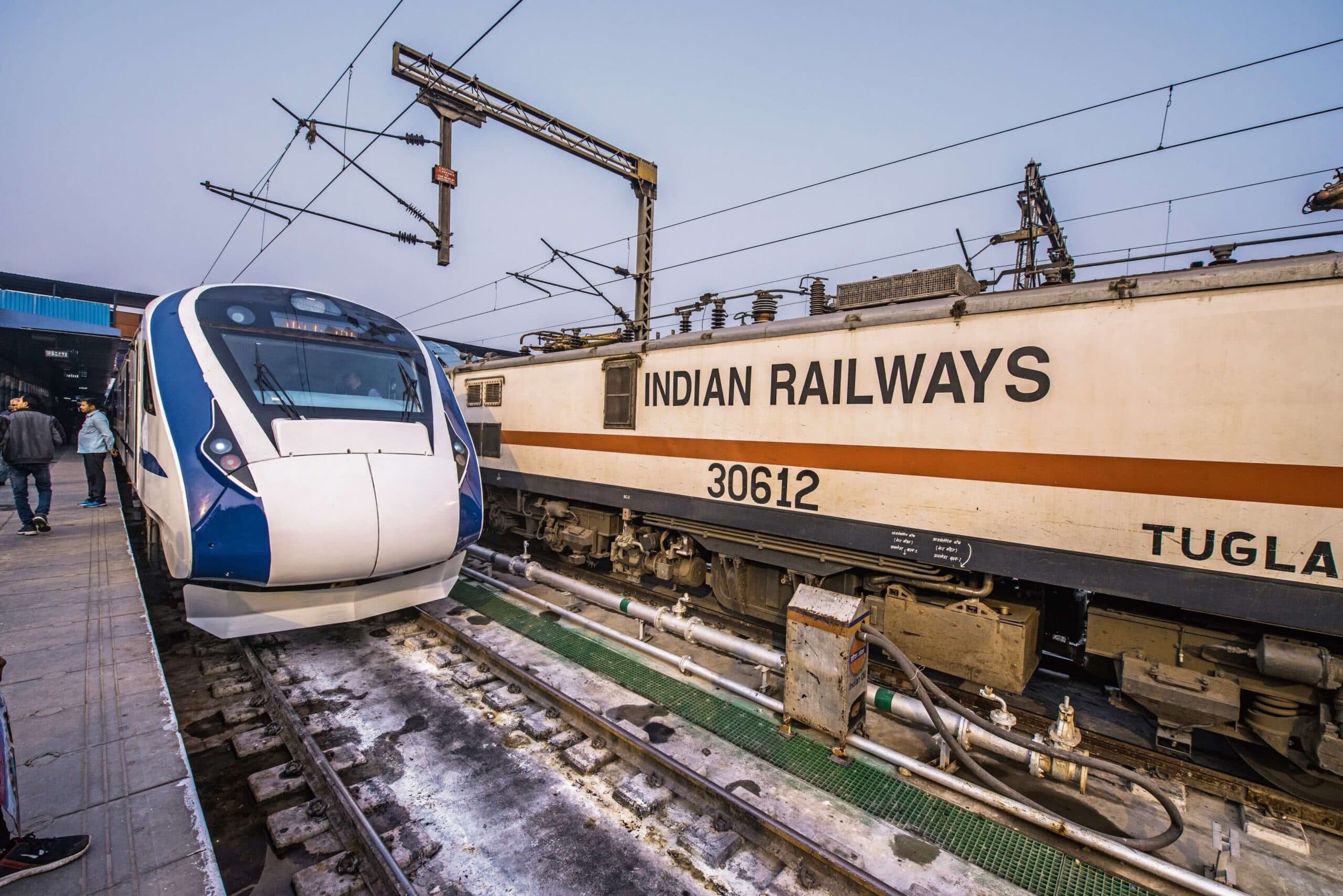
India has electrified 99.2% of its Broad Gauge railway network, with electrification of the remaining sections underway, Railway Minister Ashwini Vaishnaw informed the Lok Sabha in a written reply on Wednesday. The achievement places Indian Railways among global leaders in railway electrification, surpassing major economies including the United Kingdom (39%), Russia (52%), France (60%), Japan (64%), and Spain (67%).
Dramatic Acceleration Under Mission Mode
Railway electrification has progressed rapidly since 2014, with 46,900 route kilometers electrified between 2014-25 compared to just 21,801 route kilometers in the six decades before 2014. During 2023-24, railways electrified 7,188 route kilometers, followed by 2,701 route kilometers in 2024-25. All new line and multi-tracking projects are now being sanctioned and constructed with electrification included.
14 Railway Zones Fully Electrified
Fourteen railway zones have achieved 100% electrification, including Central, Eastern, Northern, Southern (major sections), and Western Railways. Northeast Frontier Railway stands at 95% electrification.
Northeast Progress Notable
Five northeastern states—Arunachal Pradesh, Meghalaya, Nagaland, Tripura, and Mizoram—have achieved 100% electrification of their existing Broad Gauge networks. Assam has reached 92% electrification, with remaining work underway.
Environmental Impact Significant
Rail transport produces approximately 89% less carbon emissions compared to road transport. Moving one tonne of freight one kilometer by rail emits just 11.5 grams of CO2 versus 101 grams by road, according to NITI Aayog data. Indian Railways is committed to sustainable operations through electrification combined with renewable energy sources including solar and wind power.