
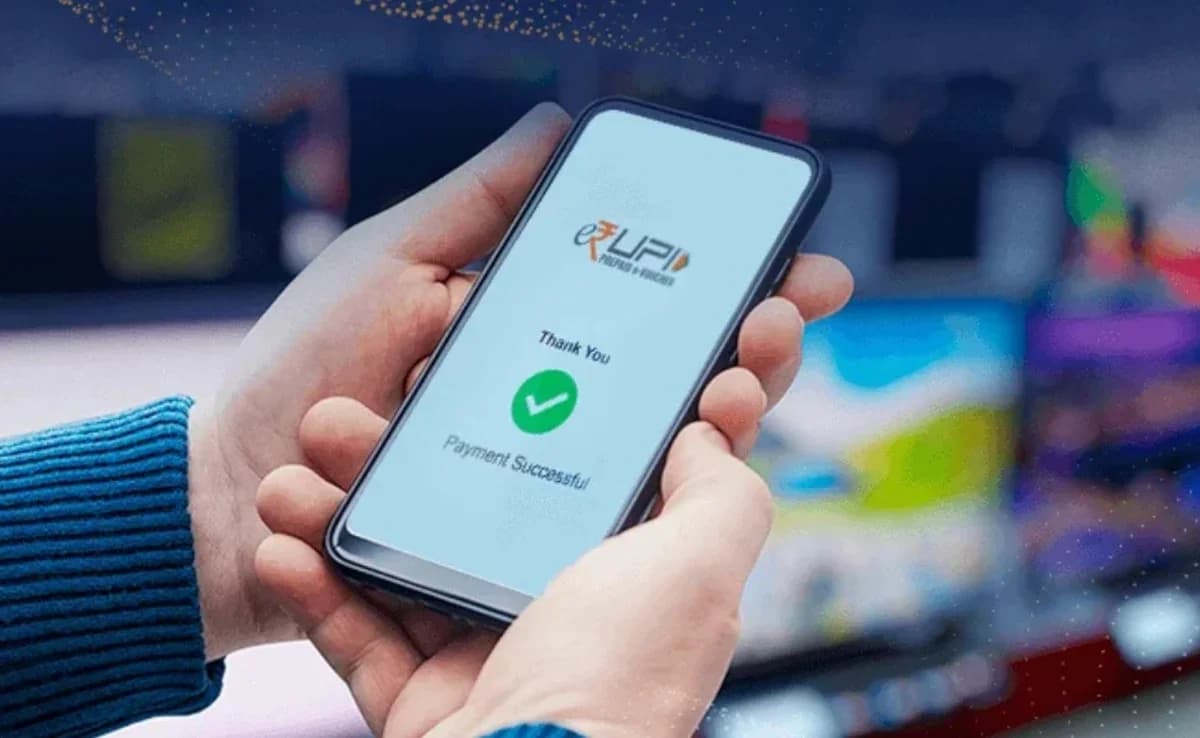
The Government of India has clarified that Unified Payments Interface (UPI) transactions will continue to remain free for consumers, dismissing concerns that the proposed amendment to the Payment and Settlement Systems (PSS) Act would lead to charges on everyday digital payments.
In a statement issued on Friday, the government reiterated that users making payments through UPI will not face any transaction charges. It also confirmed that all person-to-person (P2P) transactions will continue to remain free.
The clarification comes amid widespread discussions surrounding the proposed amendment to the Payment and Settlement Systems Act, 2007. According to the government, the amendment is only an enabling provision aimed at ensuring the long-term sustainability, technological advancement and resilience of India's digital payment ecosystem.
The government stated that if a Merchant Discount Rate (MDR) is introduced in the future, it would apply only to a limited category of merchant transactions above a specified threshold. It added that the MDR, if implemented, would be nominal and significantly lower than the charges currently applicable on debit and credit card transactions. The government further emphasised that the vast majority of merchant transactions on UPI would continue to remain free.
It also clarified that once Parliament passes the Taxation and Other Laws (Amendment) Bill, 2026, which proposes amendments to Section 10A of the Payment and Settlement Systems Act, the UPI and Services Steering Committee, headed by the National Payments Corporation of India (NPCI), will decide whether any MDR should be introduced and determine its structure.
Explaining the rationale behind the amendment, the government said the exponential growth in UPI transactions has increased the need for continuous investments in cybersecurity, fraud prevention and payment infrastructure. It added that encouraging greater participation from payment service providers and ensuring a sustainable revenue model would help strengthen the ecosystem and support its future expansion.
The government also rejected reports suggesting that external influences were behind the proposed policy changes, describing such claims as false and misleading. It noted that India introduced UPI in 2016 and made it free for both citizens and merchants from January 2020, underscoring its commitment to building an indigenous and inclusive digital payment system.
Highlighting UPI's rapid growth, the government said the platform processed 2,366 crore transactions worth ₹29.9 lakh crore in July 2026, making it the world's largest real-time payment system. It added that UPI is currently operational in 11 countries, with several others showing interest in adopting the platform.
Reaffirming its commitment, the government said UPI will remain free for citizens, everyday consumer transactions will not attract charges, and any future MDR, if introduced, will be limited to select merchant transactions. It also urged citizens to rely only on official information issued by the Ministry of Finance, the Reserve Bank of India and NPCI, and avoid circulating unverified messages.