
The Supreme Court has acquitted a man in a triple murder case after he spent 22 years behind bars, strongly criticising both the trial court and the Odisha High Court for what it described as a grave miscarriage of justice.
The apex court observed that the trial court failed to properly evaluate the evidence, while the Odisha High Court refused to hear the convict's appeal on technical grounds, resulting in more than two decades of incarceration before he was finally acquitted.
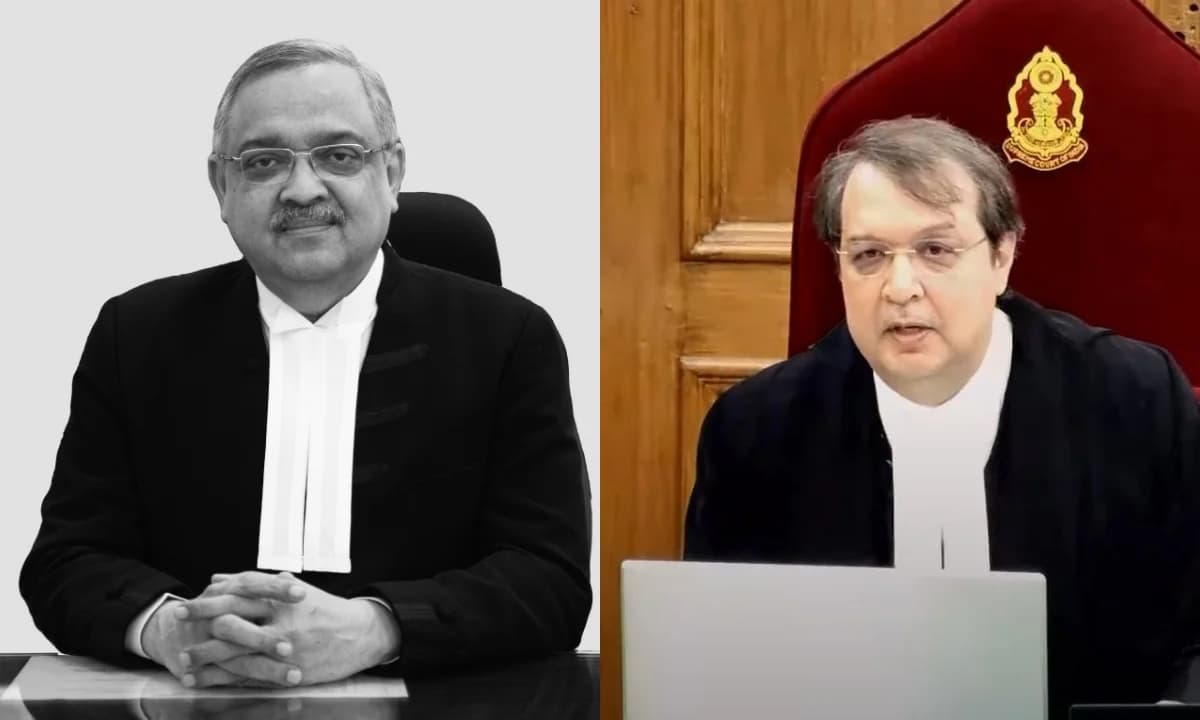
A bench comprising Justices J B Pardiwala and K Vinod Chandran expressed serious concern over the handling of the case, noting that the convict had already spent 12 years in prison when he approached the High Court. However, his appeal was dismissed after the High Court declined to condone a delay of 3,157 days in filing it. According to the Supreme Court, the decision prolonged his imprisonment by another 10 years, taking his total time in jail to 22 years.
The bench said it was deeply dismayed by the High Court's approach, observing that the appeal had been filed through jail authorities and deserved a practical and sympathetic consideration. It said the High Court should have condoned the delay and provided the convict an opportunity to argue his appeal on its merits instead of rejecting it solely on procedural grounds.
The Supreme Court further observed that when all three pillars of democracy are working to ensure legal aid reaches every citizen, especially the poor and marginalised, courts must adopt not only a liberal but also a proactive approach in condoning delays in criminal appeals filed by convicts. The bench remarked that the case highlighted continuing concerns over access to justice for marginalised sections of society, particularly those who are imprisoned.
While examining the evidence, the Supreme Court found that the conviction was primarily based on the testimony of a sole eyewitness whose evidence was unreliable and inconsistent. It held that the prosecution had failed to establish guilt beyond reasonable doubt and concluded that the case was not fit for sustaining a conviction.
The court also noted that the accused had initially been taken into custody on mere suspicion and that a confession, which was not legally admissible, had allegedly been extracted using third-degree methods. It observed that the failure of the trial court to properly assess the evidence, coupled with the High Court's refusal to hear the appeal, had resulted in 22 years of a person's life being lost without reliable evidence to justify the conviction.